Food hygiene inspections for restaurants: what the officer checks and how the rating works
- Published
- Updated
Yes Chef makes restaurant management software. This page is written by us: a summary of official guidance as of the date shown, not food-safety or legal advice.
In short
- Inspections are usually unannounced. The gap between them runs from six months to two years, by risk.
- The officer checks three things: how food is handled, the condition of the premises, and how you manage food safety.
- Ratings run from 0 to 5. Display is the law in Wales and Northern Ireland, and optional in England.
- You have 21 days to appeal a rating, a right to reply, and can ask for a re-rating visit.
Who comes, and when
A food safety officer from your local authority inspects the business. Officers will usually arrive without making an appointment, and they have the right to enter and inspect your premises at any reasonable time (Food safety inspections and enforcement).
How often depends on risk. The rating scheme’s guidance for businesses says the time between inspections varies from six months for the highest risk businesses to two years for lower risk ones. It lists what the risk depends on: the type of food handled, the number and type of customers (vulnerable groups, for example), the processes carried out before food is sold or served, and the hygiene standards seen at the last inspection.
The three things the officer checks
The guidance for businesses puts them like this:
- How hygienically the food is handled: how it is prepared, cooked, re-heated, cooled and stored.
- The physical condition of your business, including cleanliness, layout, lighting, ventilation and pest control.
- How you manage ways of keeping food safe, looking at processes, training and systems. From this the officer assesses the level of confidence in standards being maintained in the future.
During the visit, food samples can be taken as well as photographed (GOV.UK, food inspections). The officer may want to look at your Safer food, better business pack and its diary pages if you use one (SFBB guidance).
The rating
The rating is described as a snapshot of the standards of food hygiene found at the time of inspection. To get the top rating, you must do well in all three areas.
| Rating | What it means |
|---|---|
| 5 | Hygiene standards are very good |
| 4 | Hygiene standards are good |
| 3 | Hygiene standards are generally satisfactory |
| 2 | Some improvement is necessary |
| 1 | Major improvement is necessary |
| 0 | Urgent improvement is necessary |
You are told your rating in writing, either at the time of inspection or within 14 days of it, weekends and public holidays included. A rating of 5 is published as soon as the local authority uploads it. Ratings of 0 to 4 are published three to five weeks after the inspection, to allow for an appeal.
Do you have to display it?
- England: you can display your rating in the window or door. It is not required.
- Wales: you are legally required to display it in a visible place at or near each customer entrance.
- Northern Ireland: you are legally required to display it at or near each customer entrance, and to give it verbally if asked in person or over the phone.
If you disagree with the rating
The scheme has three safeguards.
- Appeal. In writing, within 21 days of being notified of your rating, weekends and public holidays included. You are told the result within 21 days of the local authority receiving it.
- Right to reply. You can tell customers how the business has improved its hygiene standards. There is no deadline; you can send it at any time up to your next inspection.
- Re-rating inspection. Once improvements are made, and only if you have accepted the rating. In Wales and Northern Ireland every local authority charges a fee; in England some do. The new rating could stay the same, go up or go down.
When the officer finds a problem
The enforcement guidance lists what an officer can do: write asking you to correct things, serve a formal legal notice that sets out what you must do or forbids certain processes, premises or equipment, seize food suspected to be unfit, and recommend a prosecution in serious cases. GOV.UK names two of the notices: the Hygiene Improvement Notice, and the Hygiene Emergency Prohibition Notice, which bans you from using certain equipment or following certain processes.
Officers will allow you enough time to make changes unless there is an immediate risk to public health. You can appeal a decision if you do not agree with the action taken.
What to have ready
The third area is the one paperwork decides. Since the officer usually comes unannounced, “ready” means the records are already up to date on an ordinary Tuesday. From the guidance read for this page, these are the records it expects a kitchen to have:
- Your food safety management system: the pack or plan itself, completed for all your food operations.
- The daily records that go with it, and how you put things right when something went wrong (food safety management systems).
- A cleaning schedule and record. It must cover what needs to be cleaned or disinfected, how often, and which products to use (cleaning guidance).
- Records of your suppliers, which you must keep, and of staff training, which the guidance calls a good idea (Managing food safety).
The same page says all your records need to be kept up to date and be available for inspections at all times.
How Yes Chef helps with the records
Yes Chef keeps the daily record: checks with the time and the name of who did each one, the checks that were missed, and the actions raised when one failed. The inspector pack puts a range of dates into one document to print or save as a PDF: missed and late checks, failed readings, records by day, incidents, corrective actions, documents on file, and equipment and servicing.
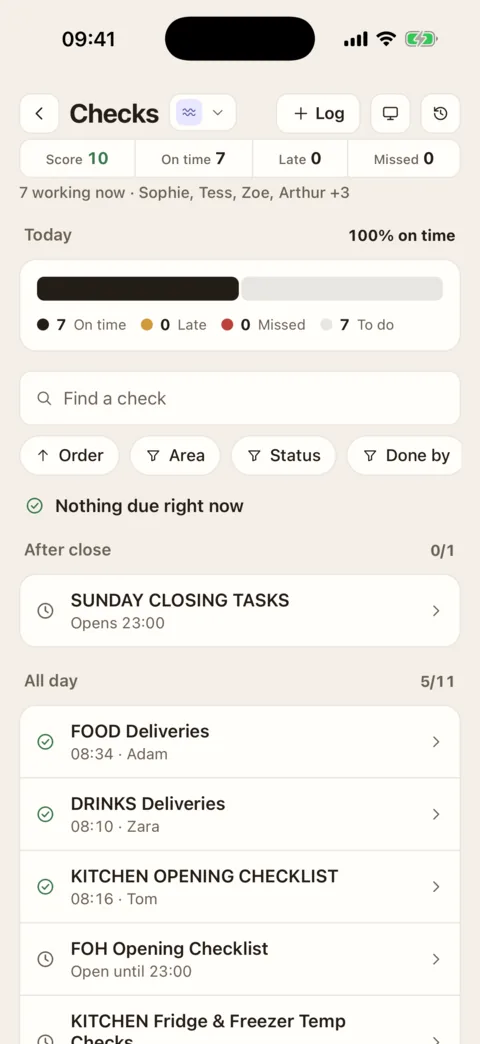
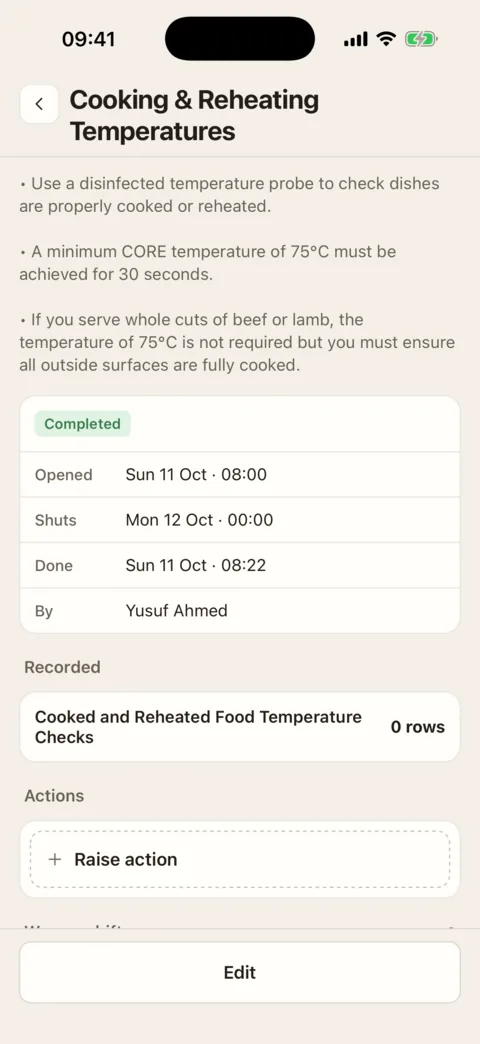
The pack is a copy of your records, gaps included. It is not a statement that they are complete or that they meet any requirement, and no app can promise a rating.
Scotland
Scotland has its own scheme, the Food Hygiene Information Scheme, run by Food Standards Scotland. There is no score. An inspected business is given Pass, meaning it meets the legal requirements for food hygiene, or Improvement Required, meaning it did not and needs to make improvements. A new business shows Awaiting Inspection.
Questions people ask
Do environmental health officers give notice before an inspection?
Usually not. The Food Standards Agency’s guidance says authorised officers will usually arrive without making an appointment, and have the right to enter and inspect premises at any reasonable time.
How often is a restaurant inspected?
It depends on risk. The Food Hygiene Rating Scheme’s guidance says the time between inspections varies from six months for the highest risk businesses to two years for lower risk businesses.
What does an environmental health officer check in a restaurant?
Three things: how hygienically the food is handled (prepared, cooked, re-heated, cooled and stored); the physical condition of the business, including cleanliness, layout, lighting, ventilation and pest control; and how the business manages keeping food safe, looking at processes, training and systems.
Do I have to display my food hygiene rating?
In Wales and Northern Ireland, yes: it must be displayed at or near each customer entrance. In England display is voluntary.
How long do I have to appeal a food hygiene rating?
An appeal must be made in writing within 21 days of being notified of the rating, including weekends and public holidays. The result comes within 21 days of the local authority receiving the appeal.
What is the food hygiene scheme in Scotland?
The Food Hygiene Information Scheme, run by Food Standards Scotland. Instead of a score from 0 to 5, a business is given Pass or Improvement Required.
See how it works, step by step
Sources
Official guidance as these pages stood on 17 November 2026: the Food Standards Agency’s for England, Wales and Northern Ireland, and Food Standards Scotland’s for Scotland. This page is a summary, not food-safety or legal advice.
- GOV.UK (Food Standards Agency), Food Hygiene Rating Scheme: guidance for businesses: gov.uk/government/publications/food-hygiene-rating-scheme-fhrs-guidance-for-businesses/food-hygiene-rating-scheme-fhrs-guidance-for-businesses (read 17 November 2026)
- GOV.UK (Food Standards Agency), Food safety inspections and enforcement: gov.uk/government/publications/food-safety-inspections-and-enforcement/food-safety-inspections-and-enforcement (read 17 November 2026)
- GOV.UK, Running a food business: food inspections: gov.uk/running-food-business/food-inspections (read 17 November 2026)
- GOV.UK (Food Standards Agency), Food safety management systems for businesses: gov.uk/food-safety-management-systems (read 17 November 2026)
- GOV.UK (Food Standards Agency), Managing food safety: gov.uk/government/publications/managing-food-safety/managing-food-safety (read 17 November 2026)
- GOV.UK (Food Standards Agency), Safer food, better business (SFBB): gov.uk/government/publications/safer-food-better-business-sfbb/safer-food-better-business-sfbb (read 17 November 2026)
- GOV.UK (Food Standards Agency), Food hygiene for your business: cleaning: gov.uk/food-hygiene-businesses/cleaning (read 17 November 2026)
- Food Standards Scotland, Food Hygiene Information Scheme: foodstandards.gov.scot/consumers/food-safety/buying-food-eating-out/food-hygiene-information-scheme (read 17 November 2026)
All product names are trade marks of their owners. Yes Chef is not affiliated with any of them. If something here is wrong or out of date, write to omar@1273.co.uk and we will correct it.
Want Yes Chef for your restaurant?
The first three months are free. It is offered to a limited number of restaurants, and we set each one up ourselves, so there is no sign-up form and no published price. Write and tell us about yours.
Get in touchNot your restaurant? Refer a restaurant. When it becomes a paying customer, we pay you £500. How referring works